My First Time on NPR: Are We Building Software We Can’t Control?
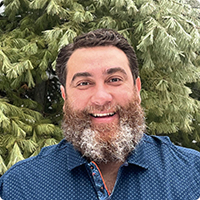
I still have to pause before I write this: I have been a guest on NPR.
On November 13, 2026, WYPR 88.1 FM in Baltimore published my conversation with Jason Michael Perry on Thoughts on Tech & Things, a show that reaches listeners on public radio, in podcast apps, and on YouTube. The episode is titled Are We Building Software We Can’t Control?
I have spent more than twenty years in technology. It started with a free Ubuntu CD, and since then I have written books, taught classes, presented on stages, and recorded plenty of podcasts. Hearing the show open with my name, then being thanked for joining “the audience on NPR,” is a different feeling. It is a national, public, general audience, not only people who already know what a BGP session is. I told Jason on air that it was very special to me, and I meant it.
Thank you to Jason and the WYPR team for making room for it. Thank you to Itential for supporting the work, and to the NetClaw community, because the story I got to tell exists because of you.
Watch on YouTube, listen on Apple Podcasts, listen on Spotify, or read the episode page on WYPR.
The conversation, in order
Timestamps refer to the 49-minute YouTube upload and were checked against its automatic captions. The conversation includes a sponsor break at about 28:00.
1:50 · A very special day. Jason introduces the question behind the episode: we are building faster than ever while writing less code than ever, so are we building software we cannot control? I thank him and the audience.
3:01 · Another layer of abstraction. Software engineering is changing, and in my corner of the world the pattern is people talking to agents, and agents talking to controllers, clouds, and APIs. Network automation did not set the world on fire in fifteen years. Letting engineers express what they know in plain language might.
7:23 · Three agents, one conversation. While we talked, agents were testing a mobile app on my real phone, installing it, measuring, tearing it down, and redeploying. I said I had no reservations about it, which is itself a sign of how quickly trust shifts.
13:17 · Treat it like a junior employee. Jason compares trusting AI to parenting. My answer for NetClaw is the same one I would give about a new hire: start with read access, documentation, and triage, then extend trust as it is earned.
17:14 · Specification-driven development. Jason wonders whether AI prefers waterfall to agile. I describe spec-driven development with GitHub’s Spec Kit, and at 18:18 the story of a network engineer who built a polished subnetting game in an hour, on their first try.
19:16 · Tokenomics. A buffet became a salad priced by the pound. We cover tokens, capex versus opex, and the choice between frontier, foundation, and open-weight models.
26:32 · Start an AI council. My advice to organizations is to include security, privacy, HR, and finance. I also cite the Gartner projection I mentioned on air, that agents do about 1% of network work today and may do roughly 70% by 2030.
29:00 · When agents go wrong. Jason walks through this year’s Black Hat disclosures and other reports of agents getting around their restrictions. At 32:03 I share what happened when someone told NetClaw to replicate itself to another address, and my honest reaction: every curious fibre of me wanted to try more, and every responsible one said no.
36:58 · Great power. We try not to personify the models, and we ask what ethics means for a system with a single objective.
40:15 · A tool that uses tools. The oldest human story is the lever and the boulder. What do we call a tool that can use other tools?
41:36 · Deterministic and probabilistic, together. My Python script does not need 1,200 lines when an agent can handle the rate limits and the edge cases. At 44:13 I describe the end state I see most often: an agent iterates until the work is reliable, then becomes an ordinary workflow with no token cost.
47:27 · Router one is fine. Jason closes by asking what excites me most. I pick up my Apple Watch, ask NetClaw about the health of a router, and about 35 seconds later the answer comes back as audio. I built the mobile app over a weekend. I told him I feel like a twelve-year-old finding Doom for the first time.
What I took from it
The question in the title deserves a serious answer, and I do not think the answer is to stop. It is to be deliberate: sandbox the agent, keep a human in or on the loop for risky actions, write specifications and tests, watch the cost, and move whatever becomes reliable into deterministic automation.
I would also like to hear more from non-engineers. Some of the best questions in this conversation came from a host who builds software and who also speaks to the general public. That is what a national audience gives us.
- Explore NetClaw and the NetClaw Mobile app.
- Read about the Heavy Networking conversation, where we go deeper on approvals, protection, and federation.
- See more conversations and appearances.
- Join the VibeOps community.