Chapter 1 What is Network Automation?
For diagrams, tables, or exact code formatting, .
VLAN information. SVI information. VRF information. Routing (OSPF, EIGRP, static routes) information. Default gateway. Access control lists. Physical and virtual interface standards:
o VLAN. o IP Address. o Voice VLAN. o STP toolkit settings. o Power over Ethernet (PoE) settings. o QoS settings. o 802.1x or port security settings. o Trunk or access port settings.
Data Models Data models are structured, human-readable, intent-based text files. Data models are also known as data dictionaries and hold the variables leveraged by dynamic templates. These models become the source of truth and network devices are configured to a desired state based on intent. Data models are written in YAML format. For the most part key-pair values and lists make up a data model. There will be both group and host variables that apply to a collection of devices or an individual device on the network. Modeling data is a key component of network automation and considerable time and care should be spent creating them. It is not uncommon to refactor a model multiple times before the most effective way to handle data that can scale is found.
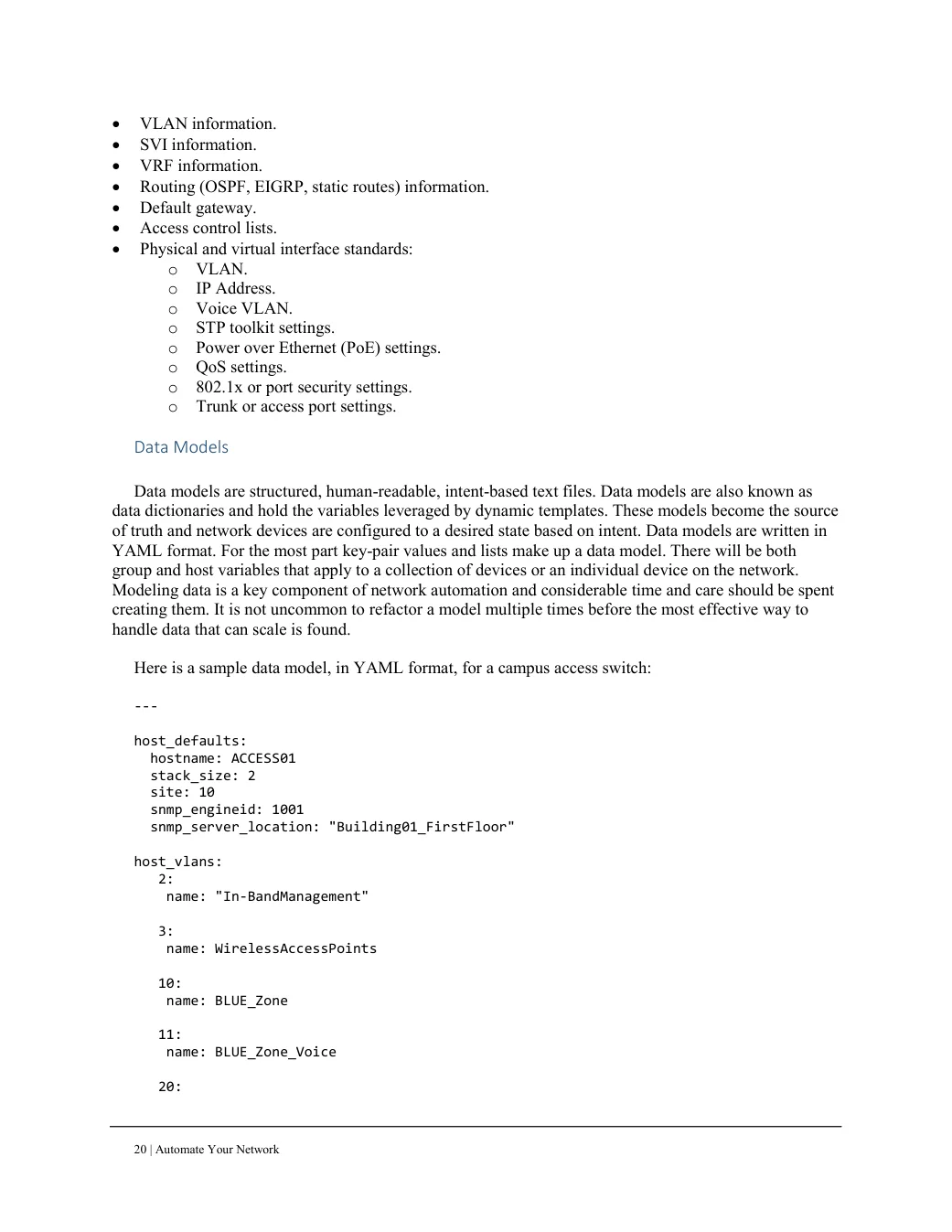
Here is a sample data model, in YAML format, for a campus access switch:

---

host_defaults:
  hostname: ACCESS01
  stack_size: 2
  site: 10
  snmp_engineid: 1001
  snmp_server_location: "Building01_FirstFloor"

host_vlans:
   2:
    name: "In-BandManagement"

   3:
    name: WirelessAccessPoints

   10:
    name: BLUE_Zone

   11:
    name: BLUE_Zone_Voice

   20: